
Content marketing has become the backbone of digital marketing in 2026. Instead of pushing ads, businesses are now focusing on creating valuable, informative, and engaging content that naturally attracts customers. Whether it’s blog posts, social media content, videos, or emails, the goal is to build trust and provide solutions to your audience’s problems.
Today’s customers are smarter—they research, compare, and only choose brands they trust. This is where content marketing plays a powerful role. By consistently delivering helpful content, businesses can attract the right audience, build long-term relationships, and turn visitors into loyal customers.
What is Content Marketing?
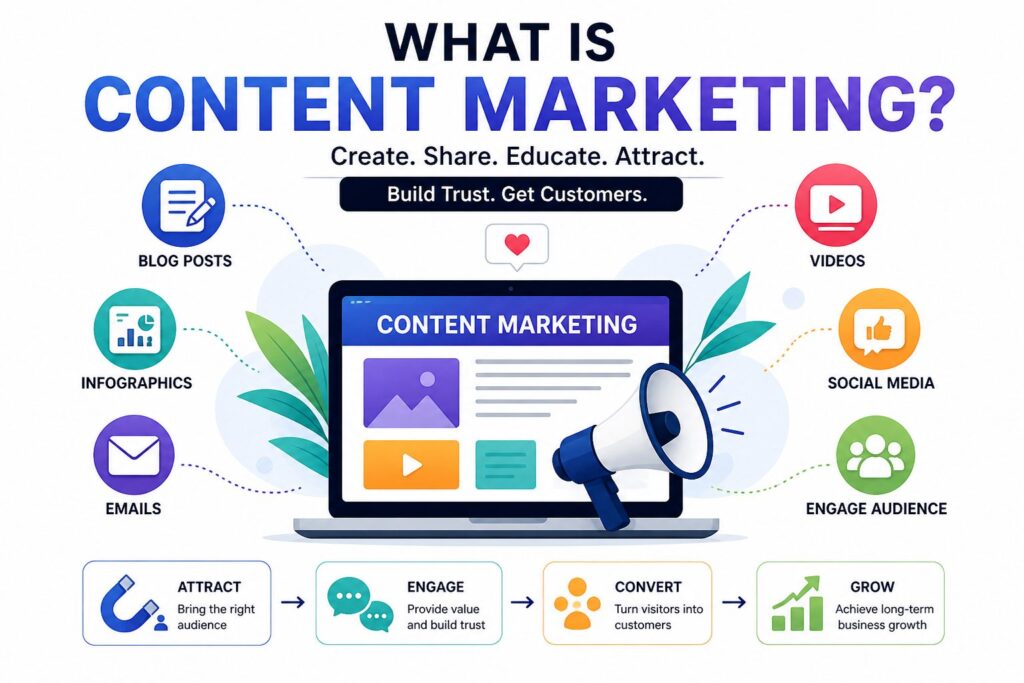
Content marketing is a powerful digital marketing strategy focused on creating and sharing valuable, relevant, and consistent content to attract and retain a clearly defined audience. Instead of directly promoting products or services, content marketing aims to educate, inform, and solve problems for potential customers.
In today’s digital world, people don’t trust traditional advertising as much as before. They prefer to research, learn, and make decisions based on useful information. This is where content marketing plays a key role—it helps businesses build trust and long-term relationships with their customers
How to Create Content That Attracts Customers
Creating content is not just about posting regularly—you need to create the right content that connects with your audience and solves their problems.
- Understand your audience’s problems
- Use simple and clear language
- Create content that solves those problem
- Add visuals like images or videos
- Be consistent with postin
Top Content Ideas for Local Businesses
If you’re targeting local clients, these ideas work best:
- Tips for growing local business online
- Customer success stories
- Behind-the-scenes of your work
- Local market trends
- Service explanations (what you offer)
Storytelling in Marketing: Why It Works
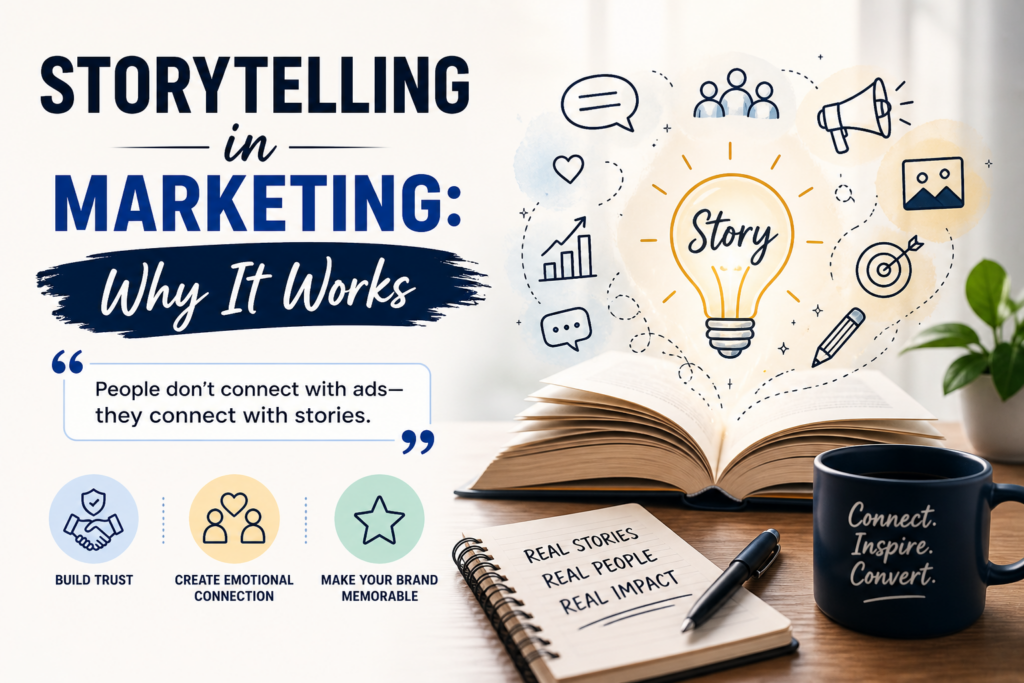
Storytelling also helps simplify complex ideas. Instead of explaining technical details, you can turn your message into an easy-to-understand story. This makes your content more engaging and keeps your audience interested for longer.
Another important benefit of storytelling is that it builds authenticity. When you share real experiences—your journey, challenges, or client success stories—people feel that your brand is honest and transparent. This creates a stronger connection compared to traditional marketing.
Stories also guide your audience through a journey. A good story shows a problem, the solution, and the final result. This naturally helps potential customers understand how your service can help them in their own situation.
In today’s digital world, attention is very limited. Storytelling helps you stand out by making your content more human and relatable. Whether it’s a social media post, blog, or video, a good story can quickly grab attention and keep people engaged.
Finally, storytelling encourages action. When people see real results and relatable experiences, they are more likely to trust your brand and take the next step—whether it’s following your page, contacting you, or becoming a customer.
Content marketing in 2026 is all about providing value, building trust, and staying consistent. When you focus on helping your audience instead of just selling, you naturally attract more customers and grow your business.